
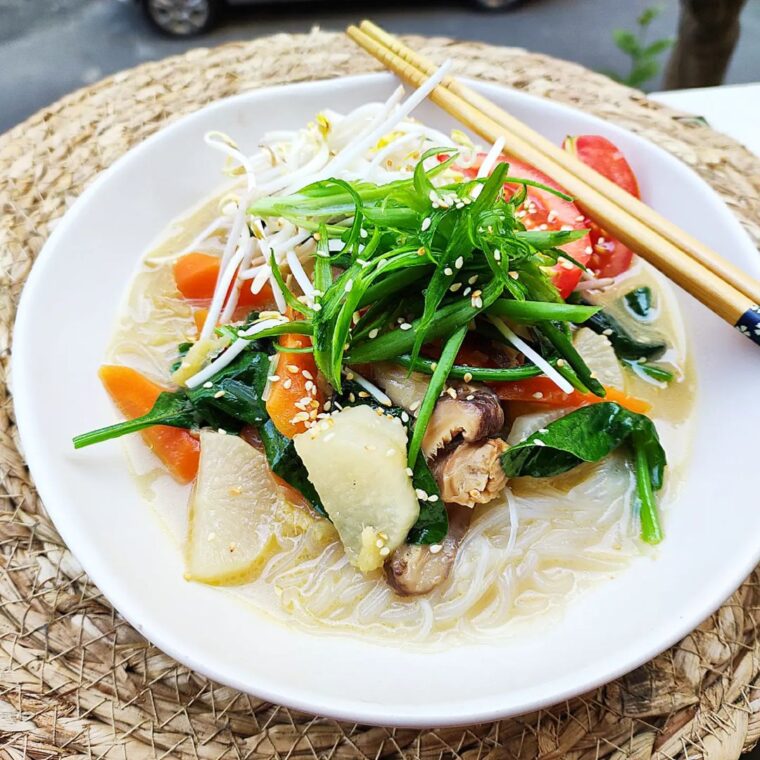
Sautéed carrots, daikon, and shiitake mushrooms form the earthy backbone of this traditional Kenchinjiru, a versatile Japanese vegetable soup that balances delicate textures with a clean, umami-rich broth. By searing the root vegetables in a blend of sesame and neutral oils, the aromatics deepen, creating a foundation that highlights the subtle sweetness of the tofu and the silkiness of the spinach.
This soup relies on a light dashi base seasoned with soy sauce and a splash of vinegar, which rounds out the flavor profile without masking the natural taste of the garden-fresh ingredients. It serves as a light yet grounding meal that comes together quickly on the stovetop, offering a refined way to incorporate more vegetables into your weekly rotation.
Whether you serve it as a standalone bowl or pair it with a side of steamed rice or noodles, the dish feels substantial enough for a quick lunch or a calm weeknight dinner. The finishing touch of toasted sesame seeds and fresh scallions adds a necessary crunch and brightness, making each spoonful feel thoughtful and balanced.
Read Full StoryIf you enjoy the comforting clarity of Kenchinjiru, exploring other global soup traditions can deepen your appreciation for broths. For a richer, spiced profile that contrasts the subtle earthiness of Japanese root vegetables, try simmering a hearty Indian Muslim mutton soup, which relies on deep aromatics rather than a soy-based foundation. Alternatively, if you prefer a light yet satisfying texture, an Egyptian orzo soup offers a wonderful interplay of delicate starch and savory broth that mirrors the rustic charm of traditional Japanese home cooking.
Key Ingredients
- Firm Tofu: Cubed firm tofu provides a soft, protein-rich foundation for the vegetable broth.
- Dashi: This savory mushroom or kombu stock serves as the essential umami-rich base for the soup.
- Daikon: Sliced daikon radish adds a subtle sweetness and crisp texture to the simmered vegetables.
- Shiitake Mushrooms: Rehydrated dried shiitake mushrooms contribute a deep, earthy aroma and meaty texture.
- Light Soy Sauce: Light soy sauce seasons the broth while maintaining its clear, delicate color.
- Sesame Oil: A tablespoon of sesame oil is used to sauté the vegetables, imparting a nutty fragrance.
- Spinach: Fresh spinach is wilted into the soup during the final minute to add color and nutrients.
Global Soups for Cozy Evenings
- Turkish yoghurt and meatball soup provides a creamy, tangy counterpart to clear vegetable broths, adding a layer of indulgence to your meal rotation.
- For those who enjoy the specific textures found in Kenchinjiru, this tofu skin soup mimics that familiar plant-based satisfaction with an extra layer of delicate chew.
- If you are looking for a plant-based alternative that maintains a clear, restorative profile, this vegan Vietnamese glass noodle soup is an excellent choice for a light yet filling dinner.
Kenchinjiru (Japanese Vegetable Soup)
Comments: Likes: Views:Kenchinjiru (Japanese Vegetable Soup) Ingredients
Steps
Fooooods Team curates recipe inspiration from food creators worldwide, focusing on flavor discovery, visual appeal, and accessible home cooking ideas. More about our editorial process →