
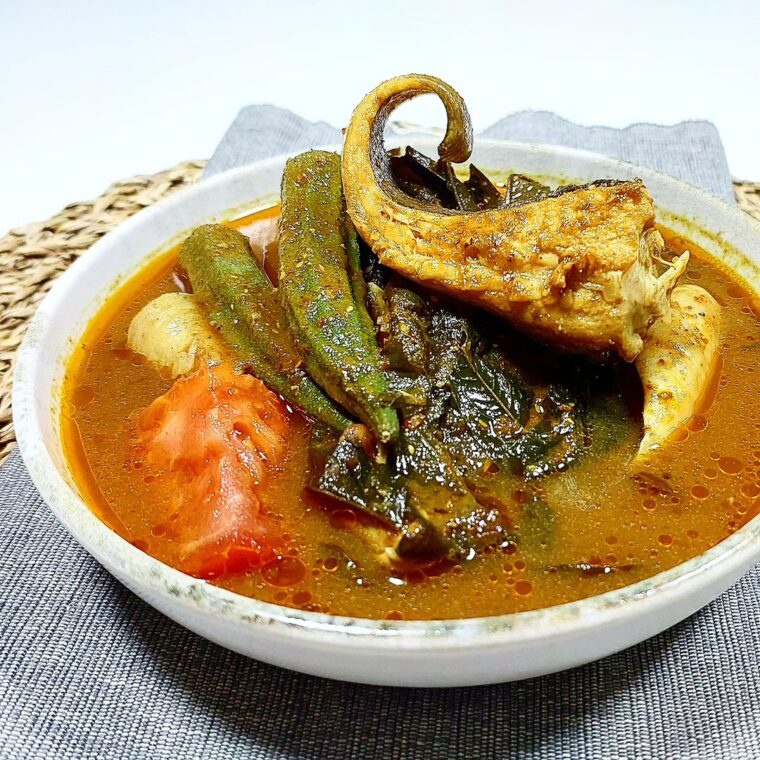
Tender stingray simmered in a tangy, spicy tamarind broth is the hallmark of a classic Asam Pedas Ikan Pari. This Indonesian-style stew relies on a deep-fried spice base of dried red chillies, ginger, belacan, and black pepper, which melds with the acidic tamarind juice to create a balanced, mouth-watering gravy that cuts through the richness of the fish.
The addition of ladyfingers and Vietnamese cilantro provides a necessary crunch and a distinct, fragrant herbal finish that rounds out the heat. As the stew bubbles away, the aroma of toasted shrimp paste and lemongrass fills the kitchen, signaling that the gravy has reached the ideal consistency for coating each piece of fish.
Serving this over a warm mound of steamed white rice is the best way to enjoy the contrast between the firm, delicate stingray and the piquant broth. It is a satisfying main course that rewards the time spent slowly sauteing the spice paste, resulting in a depth of flavor that develops beautifully on the stove.
Read Full StoryIf you enjoy the complex, tangy profiles found in this stingray stew, you should explore other regional staples that celebrate similar bold, acidic notes. For a slightly different take on the classic tamarind base, try preparing a spicy tamarind fish stew, which highlights how well aromatic spices cut through fatty fillets. Alternatively, if you prefer a lighter, clearer broth that still packs a punch of acidity, this sour fish soup is an excellent way to balance delicate seafood with vibrant, zesty seasonings.
Key Ingredients
- Stingray: The primary protein source that provides a firm, meaty texture to the spicy stew.
- Tamarind paste: Forms the essential tangy sour base that defines the character of the broth.
- Dried red chillies: The main component of the spice paste, providing the signature heat and vibrant color.
- Shrimp paste: Adds a pungent, savory depth of umami to the spicy aromatic gravy.
- Lemongrass: Infuses the stew with a bright, citrusy aroma that balances the bold spice paste.
- Ladyfingers: Used as a crisp, tender vegetable addition that absorbs the flavorful tamarind gravy.
- Fenugreek seeds: Provides a subtle, nutty, and bitter aromatic note during the initial sauté phase.
- Vietnamese cilantro: Adds a distinctive herbaceous fragrance and authentic flavor profile to the finished dish.
Explore More Indonesian Sour and Savory Braises
- If you want to move beyond seafood, this sweet soy beef stew offers a comforting, umami-rich contrast to the sharper flavors of Asam Pedas.
- For those who love the interplay of okra and sour broth, this simple Asam Rebus okra soup is a foundational recipe that captures the essence of classic Malay and Indonesian sour soups.
- This Lempah Kuning Daging is the perfect follow-up if you are looking to replicate that iconic yellow, turmeric-based spice profile with hearty cuts of beef.
Asam Pedas Ikan Pari (Indonesian Sour & Spicy Stingray Stew)
Comments: Likes: Views:Ingredients
Spice Paste
Steps
Fooooods Team curates recipe inspiration from food creators worldwide, focusing on flavor discovery, visual appeal, and accessible home cooking ideas. More about our editorial process →