
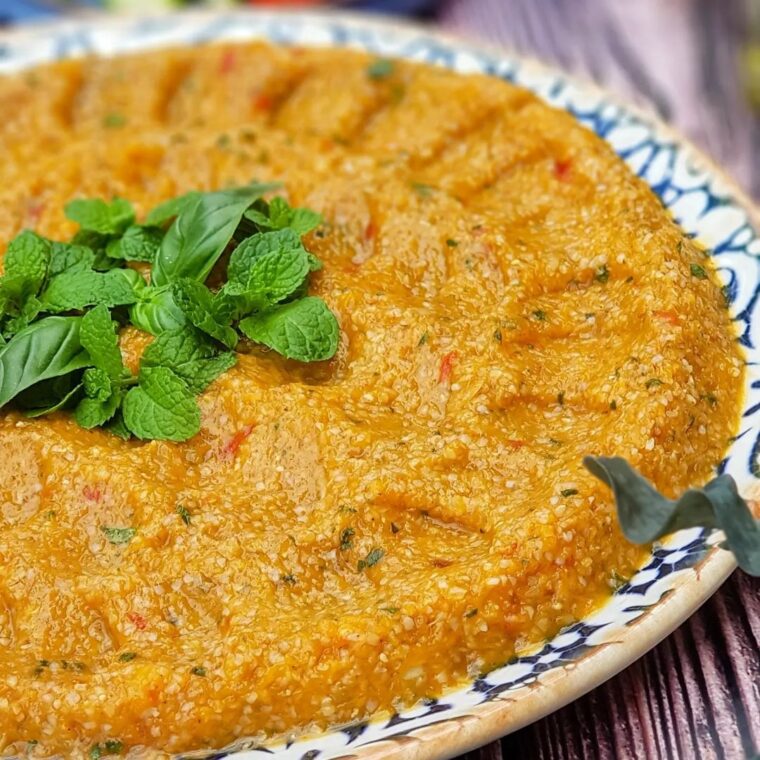
Tender butternut pumpkin mashed with fine brown burghul creates the foundation for this fresh, plant-based take on traditional kibbeh nayeh. By replacing the usual raw meat with silky, earth-toned squash, the dish gains a subtle natural sweetness that balances beautifully with the sharp bite of red onion, aromatic basil, and cooling mint.
Warm notes of cumin and baharat provide a deep, savory complexity, while a hit of red chilli adds just enough heat to cut through the smooth texture. The burghul is allowed to hydrate in the pumpkin's natural juices, giving the final mixture a satisfying, dense consistency that feels substantial without being heavy.
It is best served chilled or at room temperature, making it a reliable option for a mezze platter or a light lunch. Arrange it on a plate with generous drizzles of extra virgin olive oil, alongside radish slices, fresh herbs, and warm Lebanese bread for scooping.
Read Full StoryWhile this plant-based version focuses on seasonal vegetables and bulgur, those interested in the authentic preparation of the original meat-based dish should explore our classic Kibbeh Nayeh recipe. Mastering the traditional techniques provides a great foundation for understanding how to balance raw textures and spices. For those curious about regional variations, our guide to preparing Kibbeh Nayi offers additional insight into the subtle spice blends and presentation styles common in Middle Eastern home cooking.
Key Ingredients
- Butternut pumpkin: Boiled and mashed to provide the main base and soft texture of the dish.
- Burghul: Fine grains are mixed with the pumpkin to absorb moisture and thicken the texture.
- Red capsicum: Blended into the mixture to add a subtle sweetness and vibrant color.
- Baharat: A traditional Lebanese spice blend used to define the signature aromatic profile.
- Fresh herbs: Fresh basil and mint leaves are blended in to provide a bright, fragrant finish.
- Cumin: Adds an essential earthy warmth that balances the sweetness of the pumpkin.
- Chilli: Fresh or flakes provide a necessary kick to contrast the mild vegetable base.
Essential Middle Eastern Vegetarian Classics
- If you enjoy working with fresh herbs and grains, these hand-rolled vegetarian grape leaves are a perfect follow-up to your kibbeh prep.
- For a heartier meal that utilizes similar Middle Eastern aromatic profiles, try these slow-cooked vegetarian cabbage rolls.
- To experiment with different textures while keeping the spirit of the dish, this savory baked potato kibbeh offers a satisfying, comforting alternative to the traditional raw style.
Fooooods Team curates recipe inspiration from food creators worldwide, focusing on flavor discovery, visual appeal, and accessible home cooking ideas. More about our editorial process →